The quiet influence of people we'll never remember
The Passengers on the Hankyu Line is a quiet reminder that strangers are never just background noise. Discover why the people you ignore may matter more than you think.
I flew in first class once, and on the flight, the seat next to me was empty. Right before take off, the flight attendant came up to me and asked if it was okay that someone sit next to me. It happened to this beautiful hijabi who wasn’t comfortable sitting next to a man.
Mid-flight, we started to get some turbulence. At that age, I could sleep through anything (I’ve slept through a snowstorm, tornado, sandstorm, thunderstorm, earthquake…). The lady next to me…not so much.
All of a sudden, I felt someone grab my hand. She was nervous and was muttering Quranic verses under her breath. I smiled and reassured her.
We ended up talking for the rest of the flight, and what I found was a genuinely kind soul who, like many out here, is terrified of flying. But she faces that fear and gets on flights anyway.
When we landed at our destination, we parted ways. Twenty years later, I wonder if I ever cross her mind as she does mine from time to time.
Because, after all, how often do you get to sit next to a member of the Terengganu royal family?
And it begs the bigger question: whose head are you living in right now, without knowing it?
Have we lost the art of noticing each other?
Think about the last time you were on the train, in a rideshare, in a waiting room, walking down the street, or even sitting at your local coffee shop.
Did you have your phone out? Earbuds in? Chances are, so did the people around you.
It seems that we’ve found ways to engineer strangers out of our lives. Now, that’s not to say that the generations before us were any observant. But it seems that we’ve just added more ways to “not my monkey, not my zoo.”
We now have food deliveries, so we don’t have to interact with servers. There are self-checkout counters, so we don’t have to make small talk with the cashiers. And headphones worn (sometimes without anything even playing) so nobody tries to start a conversation.
Not my monkey. Not my zoo.
It’s exactly what sociologist Esther Chihye Kim pointed out in her research published in Symbolic Interaction. She highlights that commuters actively perform avoidance on public transport, like pretending to be busy, checking their phones, rummaging through bags, looking past people, or falling asleep. All this just to keep strangers from sitting next to them. (Guilty!)
She called it “nonsocial transient behavior” and her concern was simple: when the desire to not be bothered by strangers becomes part of everyday life, it signals a breakdown of society.
“I understand that they may feel this way on a long commute,” as she’s quoted in a Live Science article. “But when these feelings become part of their everyday lives, I believe there will be a breakdown of society.”
The thing we might be missing here
The thought of saying anything to anyone you don’t know can cause shudder-inducing fear in some. But it seems, there are benefits to be had when interacting with strangers.
For instance, one research found that train commuters who struck up a conversation with a stranger reported a significantly more positive experience than those who sat in silence.
Another research found that something as small as a smile, a brief conversation, or a moment of genuine connection with a stranger can affect how lonely we feel, how much we belong, and how mentally healthy we are. That simply means one warm, genuine moment with a stranger can move the needle on your mental health the same way a good conversation with a close friend can.
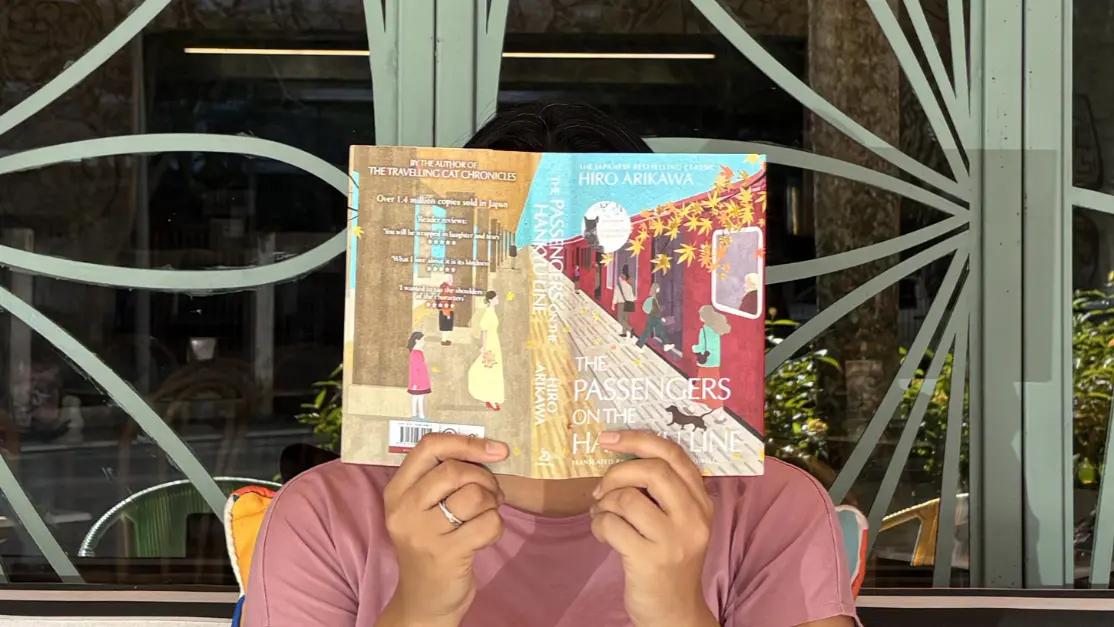
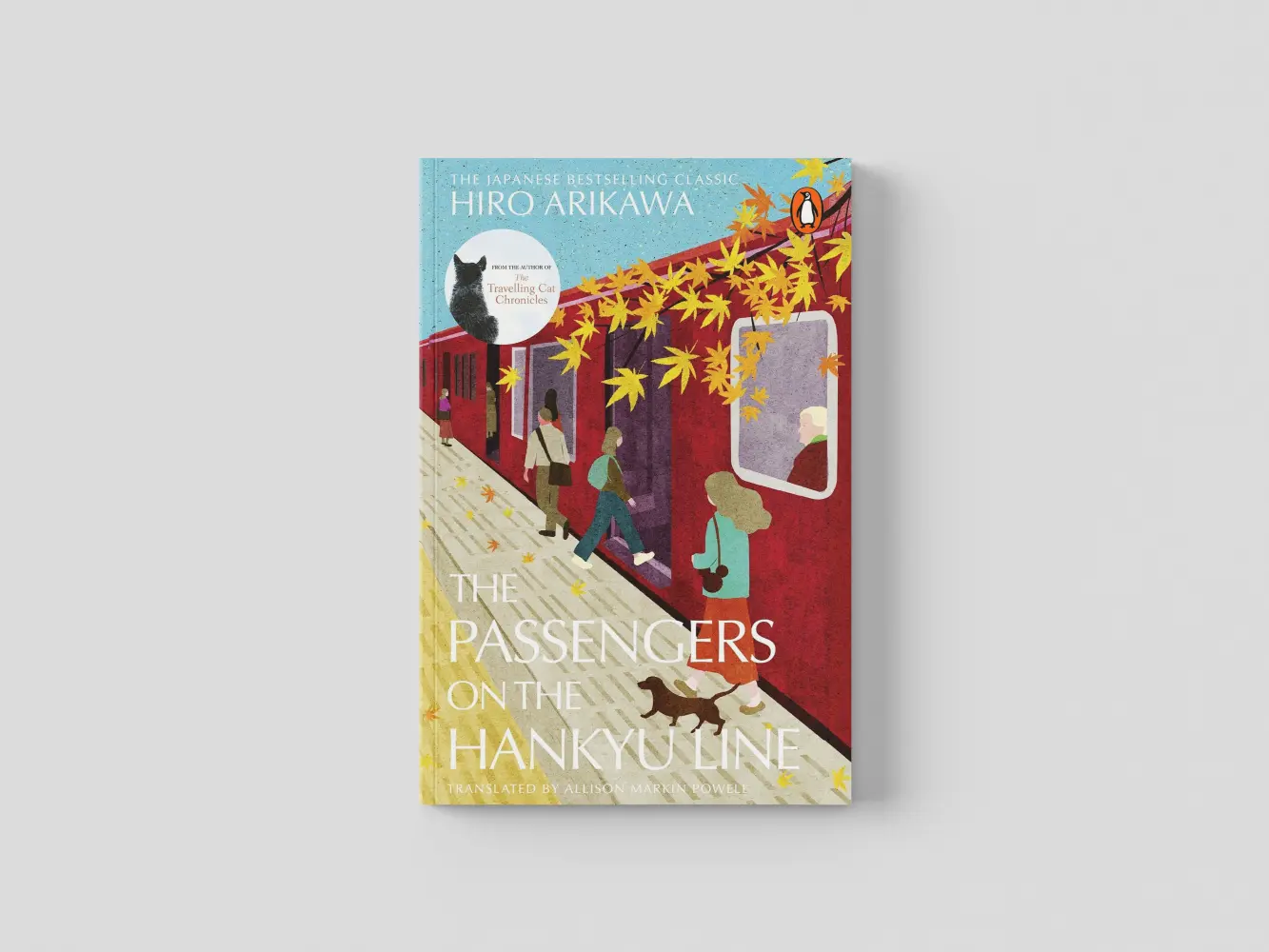
That’s the whole premise of Hiro Arikawa’s book, The Passengers on the Hankyu Line. An ordinary train journey, shared with complete strangers, can shift the course of a life.
“As the Imazu Line reverses course from Nishinomiya-Kitaguchi to Takarazuka, what stories will its passengers carry with them? Only they can know for sure.The train sets off on its finite journey, transporting as many stories as passengers.”
We’re all someone’s Hankyu passenger
I’ve ridden the train hundreds of times, sat in coffee shops thousands, and walked by strangers…well, too many to count. Yet, after reading Hiro’s book, I find myself wondering how many of those moments, where I was in my own world, quietly altered my trajectory without knowing.
That’s what the passengers of The Passengers on the Hankyu Line did for each other. Hiro weaved the stories of five, showing how none of them were aware of the effect they had on each other, yet all of them changed by it anyway.
“All manner of people from every walk of life — solo passengers, friends, couples, families, work colleagues — transverse the concourse at a brisk pace. But as they cross paths, the contents of each traveler's heart are a mystery known only to themselves.“
What I find interesting is, research actually shows that kindness is contagious. When someone benefits from a good act, they tend to pay it forward to others who weren’t even part of the original interaction. That can create a ripple that spreads like sunshine on a cloudless day.
It made me think of the royal sitting next to me in first class. She was my Hankyu passenger. Regardless of her status in life, she gave me a moment of kindness during a period of life when the naivety and unworldliness ruled.
She’s one of many. And if she could impact my life to the point where I still think back at that time 20 years later, it makes me wonder if I’ve ever been someone else’s Hankyu moment without knowing it.
Buy the book 👇🏼 (This is not an affiliate link. I won’t receive anything if you buy it.)
—
This article was written with a little help from AI (but not written by it).
More Reads
Still here? Good. There's more.

The quiet influence of people we'll never remember
The Passengers on the Hankyu Line is a quiet reminder that strangers are never just background noise. Discover why the people you ignore may matter more than you think.
I flew in first class once, and on the flight, the seat next to me was empty. Right before take off, the flight attendant came up to me and asked if it was okay that someone sit next to me. It happened to this beautiful hijabi who wasn’t comfortable sitting next to a man.
Mid-flight, we started to get some turbulence. At that age, I could sleep through anything (I’ve slept through a snowstorm, tornado, sandstorm, thunderstorm, earthquake…). The lady next to me…not so much.
All of a sudden, I felt someone grab my hand. She was nervous and was muttering Quranic verses under her breath. I smiled and reassured her.
We ended up talking for the rest of the flight, and what I found was a genuinely kind soul who, like many out here, is terrified of flying. But she faces that fear and gets on flights anyway.
When we landed at our destination, we parted ways. Twenty years later, I wonder if I ever cross her mind as she does mine from time to time.
Because, after all, how often do you get to sit next to a member of the Terengganu royal family?
And it begs the bigger question: whose head are you living in right now, without knowing it?
Have we lost the art of noticing each other?
Think about the last time you were on the train, in a rideshare, in a waiting room, walking down the street, or even sitting at your local coffee shop.
Did you have your phone out? Earbuds in? Chances are, so did the people around you.
It seems that we’ve found ways to engineer strangers out of our lives. Now, that’s not to say that the generations before us were any observant. But it seems that we’ve just added more ways to “not my monkey, not my zoo.”
We now have food deliveries, so we don’t have to interact with servers. There are self-checkout counters, so we don’t have to make small talk with the cashiers. And headphones worn (sometimes without anything even playing) so nobody tries to start a conversation.
Not my monkey. Not my zoo.
It’s exactly what sociologist Esther Chihye Kim pointed out in her research published in Symbolic Interaction. She highlights that commuters actively perform avoidance on public transport, like pretending to be busy, checking their phones, rummaging through bags, looking past people, or falling asleep. All this just to keep strangers from sitting next to them. (Guilty!)
She called it “nonsocial transient behavior” and her concern was simple: when the desire to not be bothered by strangers becomes part of everyday life, it signals a breakdown of society.
“I understand that they may feel this way on a long commute,” as she’s quoted in a Live Science article. “But when these feelings become part of their everyday lives, I believe there will be a breakdown of society.”
The thing we might be missing here
The thought of saying anything to anyone you don’t know can cause shudder-inducing fear in some. But it seems, there are benefits to be had when interacting with strangers.
For instance, one research found that train commuters who struck up a conversation with a stranger reported a significantly more positive experience than those who sat in silence.
Another research found that something as small as a smile, a brief conversation, or a moment of genuine connection with a stranger can affect how lonely we feel, how much we belong, and how mentally healthy we are. That simply means one warm, genuine moment with a stranger can move the needle on your mental health the same way a good conversation with a close friend can.
That’s the whole premise of Hiro Arikawa’s book, The Passengers on the Hankyu Line. An ordinary train journey, shared with complete strangers, can shift the course of a life.
“As the Imazu Line reverses course from Nishinomiya-Kitaguchi to Takarazuka, what stories will its passengers carry with them? Only they can know for sure.The train sets off on its finite journey, transporting as many stories as passengers.”
We’re all someone’s Hankyu passenger
I’ve ridden the train hundreds of times, sat in coffee shops thousands, and walked by strangers…well, too many to count. Yet, after reading Hiro’s book, I find myself wondering how many of those moments, where I was in my own world, quietly altered my trajectory without knowing.
That’s what the passengers of The Passengers on the Hankyu Line did for each other. Hiro weaved the stories of five, showing how none of them were aware of the effect they had on each other, yet all of them changed by it anyway.
“All manner of people from every walk of life — solo passengers, friends, couples, families, work colleagues — transverse the concourse at a brisk pace. But as they cross paths, the contents of each traveler's heart are a mystery known only to themselves.“
What I find interesting is, research actually shows that kindness is contagious. When someone benefits from a good act, they tend to pay it forward to others who weren’t even part of the original interaction. That can create a ripple that spreads like sunshine on a cloudless day.
It made me think of the royal sitting next to me in first class. She was my Hankyu passenger. Regardless of her status in life, she gave me a moment of kindness during a period of life when the naivety and unworldliness ruled.
She’s one of many. And if she could impact my life to the point where I still think back at that time 20 years later, it makes me wonder if I’ve ever been someone else’s Hankyu moment without knowing it.
Buy the book 👇🏼 (This is not an affiliate link. I won’t receive anything if you buy it.)
—
This article was written with a little help from AI (but not written by it).
More Reads
Still here? Good. There's more.
The quiet influence of people we'll never remember
The Passengers on the Hankyu Line is a quiet reminder that strangers are never just background noise. Discover why the people you ignore may matter more than you think.
I flew in first class once, and on the flight, the seat next to me was empty. Right before take off, the flight attendant came up to me and asked if it was okay that someone sit next to me. It happened to this beautiful hijabi who wasn’t comfortable sitting next to a man.
Mid-flight, we started to get some turbulence. At that age, I could sleep through anything (I’ve slept through a snowstorm, tornado, sandstorm, thunderstorm, earthquake…). The lady next to me…not so much.
All of a sudden, I felt someone grab my hand. She was nervous and was muttering Quranic verses under her breath. I smiled and reassured her.
We ended up talking for the rest of the flight, and what I found was a genuinely kind soul who, like many out here, is terrified of flying. But she faces that fear and gets on flights anyway.
When we landed at our destination, we parted ways. Twenty years later, I wonder if I ever cross her mind as she does mine from time to time.
Because, after all, how often do you get to sit next to a member of the Terengganu royal family?
And it begs the bigger question: whose head are you living in right now, without knowing it?
Have we lost the art of noticing each other?
Think about the last time you were on the train, in a rideshare, in a waiting room, walking down the street, or even sitting at your local coffee shop.
Did you have your phone out? Earbuds in? Chances are, so did the people around you.
It seems that we’ve found ways to engineer strangers out of our lives. Now, that’s not to say that the generations before us were any observant. But it seems that we’ve just added more ways to “not my monkey, not my zoo.”
We now have food deliveries, so we don’t have to interact with servers. There are self-checkout counters, so we don’t have to make small talk with the cashiers. And headphones worn (sometimes without anything even playing) so nobody tries to start a conversation.
Not my monkey. Not my zoo.
It’s exactly what sociologist Esther Chihye Kim pointed out in her research published in Symbolic Interaction. She highlights that commuters actively perform avoidance on public transport, like pretending to be busy, checking their phones, rummaging through bags, looking past people, or falling asleep. All this just to keep strangers from sitting next to them. (Guilty!)
She called it “nonsocial transient behavior” and her concern was simple: when the desire to not be bothered by strangers becomes part of everyday life, it signals a breakdown of society.
“I understand that they may feel this way on a long commute,” as she’s quoted in a Live Science article. “But when these feelings become part of their everyday lives, I believe there will be a breakdown of society.”
The thing we might be missing here
The thought of saying anything to anyone you don’t know can cause shudder-inducing fear in some. But it seems, there are benefits to be had when interacting with strangers.
For instance, one research found that train commuters who struck up a conversation with a stranger reported a significantly more positive experience than those who sat in silence.
Another research found that something as small as a smile, a brief conversation, or a moment of genuine connection with a stranger can affect how lonely we feel, how much we belong, and how mentally healthy we are. That simply means one warm, genuine moment with a stranger can move the needle on your mental health the same way a good conversation with a close friend can.
That’s the whole premise of Hiro Arikawa’s book, The Passengers on the Hankyu Line. An ordinary train journey, shared with complete strangers, can shift the course of a life.
“As the Imazu Line reverses course from Nishinomiya-Kitaguchi to Takarazuka, what stories will its passengers carry with them? Only they can know for sure.The train sets off on its finite journey, transporting as many stories as passengers.”
We’re all someone’s Hankyu passenger
I’ve ridden the train hundreds of times, sat in coffee shops thousands, and walked by strangers…well, too many to count. Yet, after reading Hiro’s book, I find myself wondering how many of those moments, where I was in my own world, quietly altered my trajectory without knowing.
That’s what the passengers of The Passengers on the Hankyu Line did for each other. Hiro weaved the stories of five, showing how none of them were aware of the effect they had on each other, yet all of them changed by it anyway.
“All manner of people from every walk of life — solo passengers, friends, couples, families, work colleagues — transverse the concourse at a brisk pace. But as they cross paths, the contents of each traveler's heart are a mystery known only to themselves.“
What I find interesting is, research actually shows that kindness is contagious. When someone benefits from a good act, they tend to pay it forward to others who weren’t even part of the original interaction. That can create a ripple that spreads like sunshine on a cloudless day.
It made me think of the royal sitting next to me in first class. She was my Hankyu passenger. Regardless of her status in life, she gave me a moment of kindness during a period of life when the naivety and unworldliness ruled.
She’s one of many. And if she could impact my life to the point where I still think back at that time 20 years later, it makes me wonder if I’ve ever been someone else’s Hankyu moment without knowing it.
Buy the book 👇🏼 (This is not an affiliate link. I won’t receive anything if you buy it.)
—
This article was written with a little help from AI (but not written by it).
More Reads
Still here? Good. There's more.